

This chair, probably Edwardian, clearly needed a new front edge – something was wrong. A new cover was obviously needed but otherwise the chair was generally in good condition.
The first step was to remove the cover, taking notes on what was fixed where.
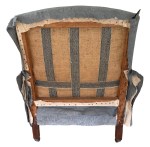
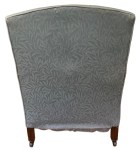
With the seat on it’s back, the under cover was removed and all fixings for the outside fabric.
The coverings on the outer back were removed.
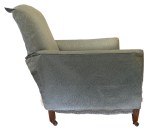
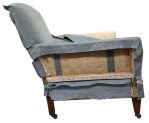
The outer arms then had their coverings removed.
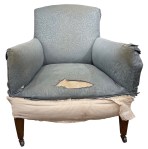
The seat front was removed along with cotton wadding. Curiously, there were tacks through the fabric but no wood.
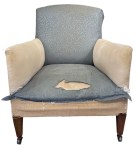
Then the arms, inner back and finally the seat were cleared of fabric.

With the cover removed it is time to investigate the crushed appearance and the mysterious loose tacks.

The calico cover for the seat was partially attached with tacks to a broken and loose piece of wood. This also explained the earlier loose tacks which must have once been in the wood.
The hessian at the front was attached to that same wood and was carefully freed.
The split hessian that covered the springs also was wrapped around a roll of coir and both were attached to this piece of wood. They too were freed.
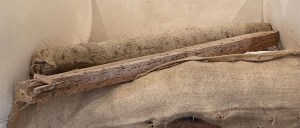
Conclusion is that this piece of wood, was critical to the construction of the rolled edge but now shattered with sheered off dowels at the ends, needed replacing!
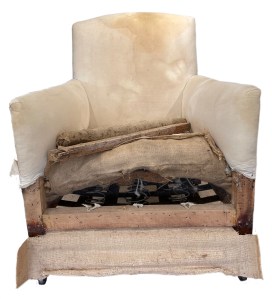
The spring hessian sheet had split and would also need replacement.
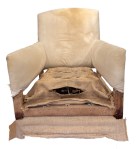
The spring ties had been broken and they would need repairing.
The stuffings covering the seat were removed.
Then the old hessian spring cover was removed.
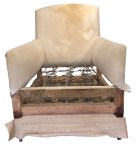
New laid cord was used to retie the springs and hold them in place.
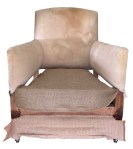
A new piece of oak was cut to the size of the original broken wood. It was glued, dowelled and screwed into the same position as the original.
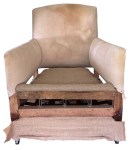
A new hessian spring cover was added with plenty of extra fabric left at the front.
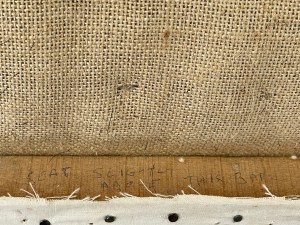
That extra fabric was used to form a new wrap for the original coir roll – wrap and roll were both fixed to the new wood.
Advice had been written on the frame at some much earlier time as to the expected height of the seat. “Seat slightly above this bar”. The advice will be followed again!
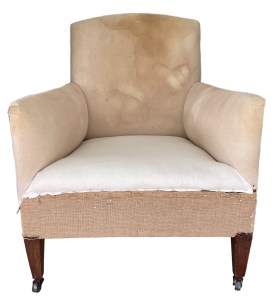
Stuffings for the seat were added and covered in a new calico cover to complete the repairs.
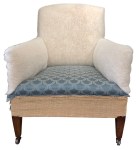
The seat was first to receive it’s new cover. Polyester wadding was added first, then the cover fabric keeping the pattern straight and placed symmetrically.
That was followed by the cover for the inner back. The pattern aligned with that of the seat.

The arms came next, making sure the placement of each was the same.
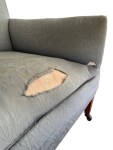
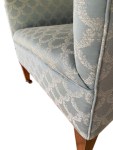
The seat front had piping machine sewn to it’s top edge and then attached.
With the seat front in place, the difference between the original and now was very apparent.
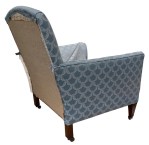
At the sides, a hessian support was added, covered in wadding and the final fabric – which was edged to top and front with piping.
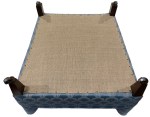
The back was treated in the same way with piping to top and sides and hand sewn into place.
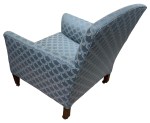
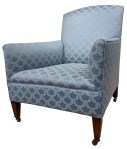
Finally, an under cloth was added to complete the project.
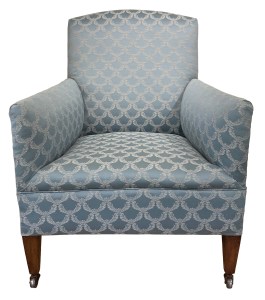
With the Edwardian Armchair complete it was returned to the owner.
JBerryUpholstery has many examples of furniture Recovering and Restoration and also Soft Furnishings to add to or complement the finished items. You can see pictures of these in the Galleries– Recovering Gallery, Restoration Gallery, Soft Furnishings Gallery and Transformations.
If you have some upholstery that is in need of a bit of TLC or you are interested in Soft Furnishings then please contact us.
 J Berry Upholstery